
A Guide to Choosing the Right Door for Your Farm Shop
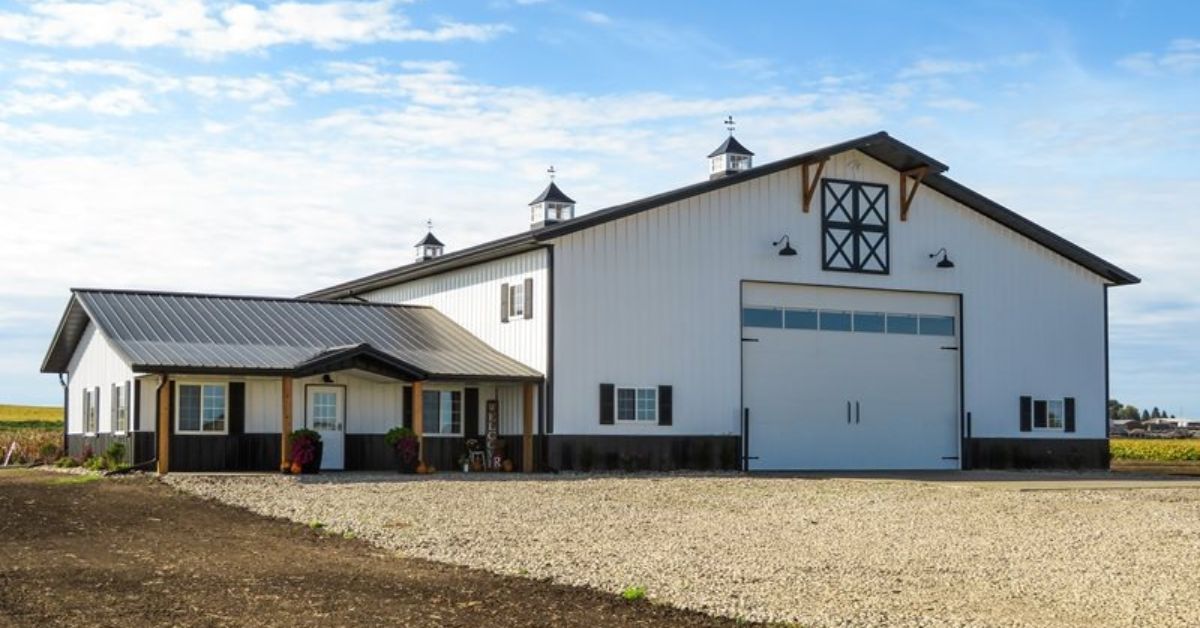
Your farm shop is the backbone of daily operations. From equipment repairs to storage and maintenance, it needs to function efficiently in every season. Knowing how to choose the right door for your farm shop helps you design a building that fully supports your workflow and protects your investment.
Why Your Farm Shop Door Matters
Farm shops see constant activity. Tractors, combines, semis, skid steers, and service trucks move in and out regularly. If a door is too small, poorly insulated, or difficult to operate, that restriction can slow down work and increase frustration.
A properly selected door:
- Supports safe equipment access
- Improves daily efficiency
- Controls interior temperatures
- Protects valuable tools and machinery
Common Types of Doors for Farm Shop Buildings
There are several door styles commonly used in farm shop buildings. Each offers distinct advantages depending on your needs, budget, and building layout.
Overhead Sectional Doors
Overhead sectional doors are among the most popular choices for farm shops. These doors operate on tracks and open vertically before resting parallel to the ceiling.
Insulated overhead sectional doors that tightly seal work well for heated shops. If your shop includes a dedicated work area with climate control, sectional doors maintain interior comfort.
They are also ideal for moderate equipment access, such as tractors, pickup trucks, and service vehicles.
Hydraulic Doors
Hydraulic doors are singular, solid panels that open outward and upward via hydraulic cylinders. These doors are a common choice for setups requiring large equipment access.
They provide a wide, unobstructed opening, which is helpful when maneuvering oversized machinery. Because the entire panel lifts as one unit, there are no overhead tracks inside the building.
Hydraulic doors are a popular solution on larger farm shop buildings where equipment height and clearance are major factors.
Sliding Doors
Sliding doors move horizontally along an exterior track. While generally cost-effective, these doors may not seal as tightly as other options. That said, sliding doors are still common in agricultural structures and may be a smart choice for unheated or partially enclosed shops.
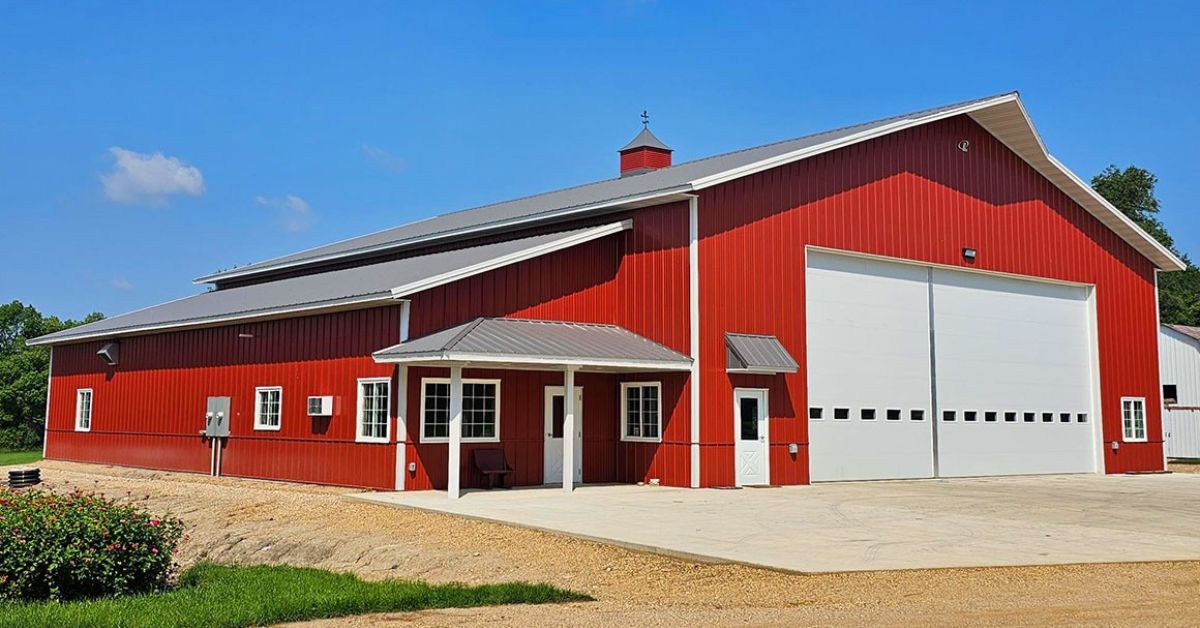
Key Factors To Consider Before Selecting a Door
Choosing the right style is only the first step. You also need to evaluate how the door will function during your daily operations.
1. Equipment Size and Clearance
Start by measuring your largest piece of equipment. Make sure your measurements include attachments such as grain heads, dual tires, or vertical exhaust stacks.
Be realistic about future needs. If you plan to upgrade equipment in the coming years, design your opening to accommodate growth. Oversizing slightly now can prevent expensive modifications later.
2. Frequency of Use
If you open and close your door multiple times a day, durability and ease of operation become critical.
High-cycle springs, quality hardware, and reliable openers make a noticeable difference over time. In heated shops, frequent use also makes insulation and proper sealing more important.
3. Insulation and Energy Efficiency
Heated farm shop buildings require doors with strong insulation values and tight weather seals. Poorly insulated doors allow heat loss in winter and unwanted heat gain in summer.
Look for insulated panels, perimeter weather stripping, and proper bottom seals. These features help you maintain consistent interior temperatures and reduce energy costs in your shop.
4. Wind and Weather Exposure
In regions with high winds, heavy snow, or extreme weather swings, structural strength matters.
Your door must be able to handle local wind loads and environmental conditions. Proper installation and quality materials are essential for long-term performance.
Sizing Your Farm Shop Door Correctly
Door size directly impacts daily productivity. An opening that is too narrow or too short can slow down equipment movement and increase the risk of damage.
Follow these general sizing guidelines to ensure your design functions for your needs:
- Width should comfortably exceed your widest equipment.
- Height should account for exhaust stacks and raised components.
- Multiple doors can improve workflow in larger shops.
- Drive-through layouts can increase efficiency.
Carefully consider the interior layout as well. The door placement should align with work areas, storage zones, and vehicle paths inside the building.
In many farm shop buildings, strategic door placement reduces tight turns and makes it easier to safely move equipment.
Operational Features That Improve Efficiency
Beyond basic function, several features can enhance the usability of your farm shop door.
Windows and Natural Light
Adding windows to overhead or hydraulic doors can increase natural light. This reduces the need for artificial lighting during the day and improves visibility near entrances.
If security is a concern, consider window placement and glazing options that will maintain strength and privacy.
Automated Openers
If your operations will lead you to frequently go in and out of shop doors, automated openers will save you time and effort. Remote access and wall-mounted controls streamline daily operations.
Automation also reduces the time doors remain open. This can be a great benefit in colder climates, as quick door closure maintains interior temperatures.
Safety Features
Modern doors can include safety sensors, reinforced tracks, and high-quality locking systems. These features protect both people and equipment.
Reliable locking mechanisms are especially important for farm shop buildings that store valuable machinery and tools.
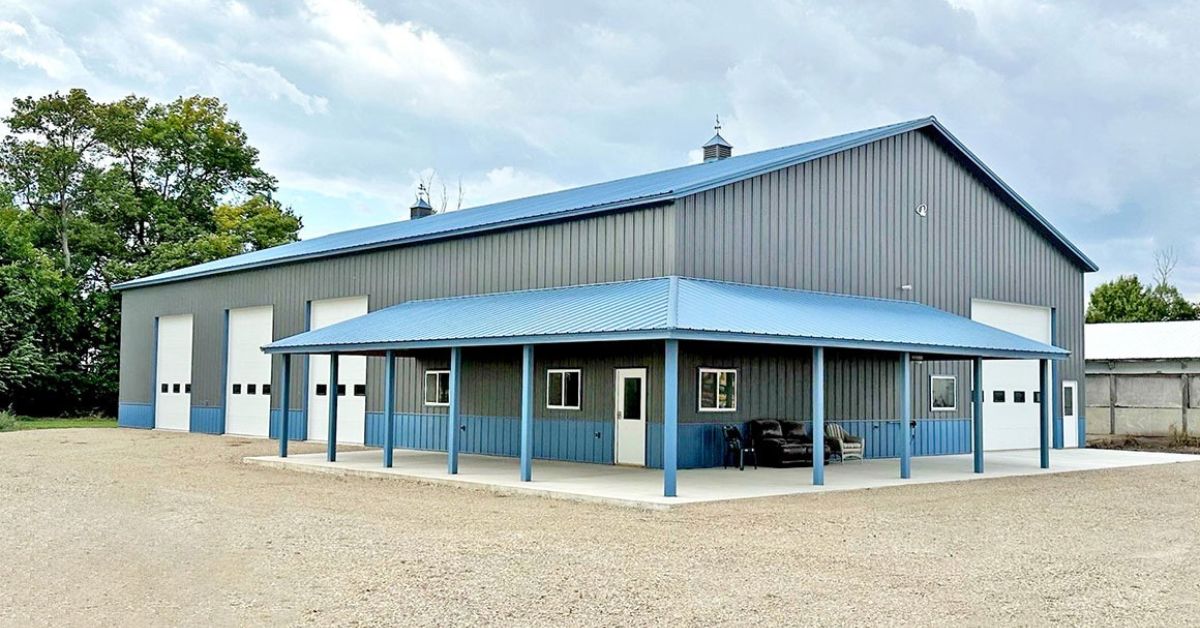
Matching the Door to Your Shop’s Purpose
Not all farm shops serve the same role. Some are primarily repair facilities, while others combine storage, maintenance, and office space.
A heated repair shop benefits from insulated sectional doors with tight seals. A large machinery storage building may prioritize wide hydraulic openings. Multi-purpose farm shop buildings often include a combination of door types to serve different areas.
Think about how your building functions today and how it might evolve in the future. Flexibility in design often pays off in the future.
Planning Door Placement During the Design Phase
Door selection should happen early in the design process. Placement affects structural layout, interior workflow, and overall building performance.
When working with a custom post-frame system, door openings are part of the building design. Professional engineering ensures structural integrity while accommodating the sizes and styles you choose.
Because Lester Buildings focuses on custom-engineered solutions, door design is part of the overall building plan rather than treated as an afterthought. This approach ensures that your farm shop buildings fully meet your specific operational needs.
Long-Term Value and Durability
Farm shops are long-term investments. Choosing a durable, well-designed door protects that investment and reduces maintenance issues.
High-quality materials, proper sealing, and engineered installation make a difference over decades of use. While cost is always a factor, selecting a door based solely on price can lead to higher long-term expenses.
A well-matched door improves efficiency, comfort, and protection every day your shop is in use.
Finishing Your Farm Shop
When you set out to choose the right door for your farm shop, think beyond the opening itself. Consider equipment size, insulation needs, frequency of use, climate conditions, and long-term plans. The right door supports daily operations and enhances the overall performance of your farm shop buildings.
If you’re planning a new shop or upgrading an existing one, use Lester Buildings’ digital design tools to visualize your layout and door options. Their custom post-frame building solutions allow you to tailor every detail—from structural design to door placement—so your building works exactly the way you need it to.
Taking the time to evaluate your options now will help you confidently choose the right door for your farm shop and create a space that serves your operation for years to come.