
Different Types of Horse Barns To Consider for Your Property
.jpg "LesterBuildingSystemsLLC-422855-Horse-Barns-Consider-blogbanner1-(1).jpg")
Choosing the right barn is one of the most important decisions you will make as a horse owner. The structure you build affects daily chores, your horses’ comfort, long-term maintenance needs, and even your property value. From layout and ventilation to future expansion opportunities, every detail matters. That is why understanding the types of horse barns to consider for your property is essential before you break ground.
Today’s horse pole barns offer flexibility, durability, and customization options that can suit a wide range of equine operations. Whether you own a few horses for riding or manage a larger boarding or training facility, the right post-frame design can support your goals. Below, we break down several common barn styles and what makes each one worth considering.
Center Aisle Barns
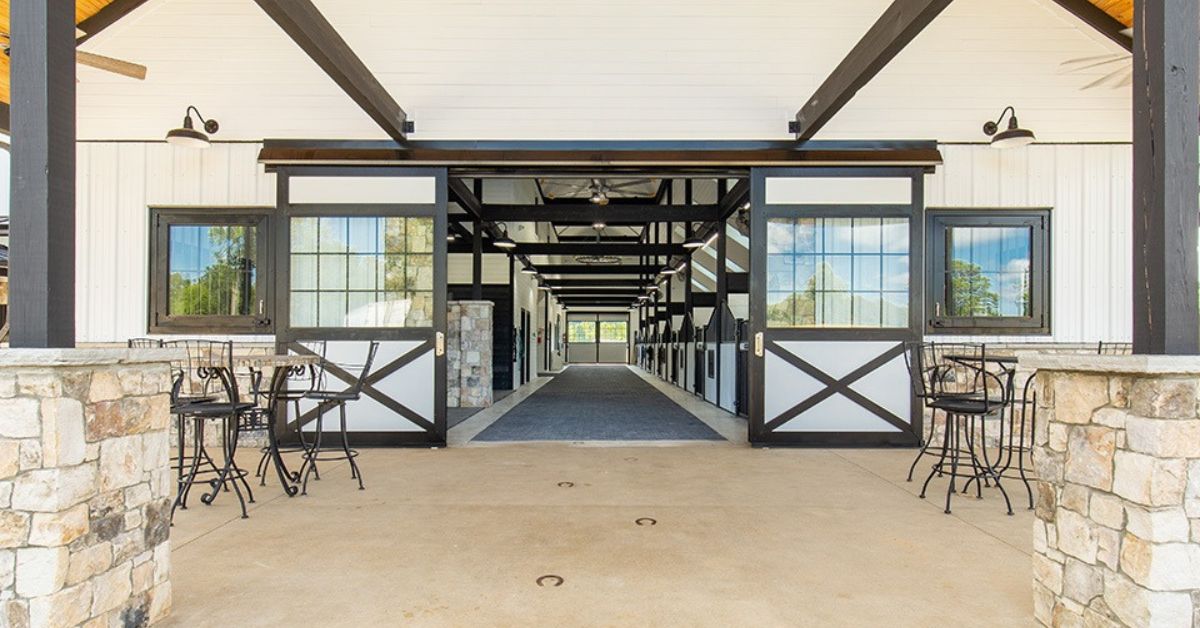
The center aisle barn is one of the most traditional and recognizable layouts. Stalls line both sides of a central walkway, creating a clean and organized traffic flow. This layout keeps feed rooms, tack rooms, and wash areas easily accessible.
Center aisle horse pole barns are especially popular in colder climates because the enclosed aisle provides protection from wind, snow, and rain. With proper insulation and ventilation, they can create a comfortable environment year-round. Many owners appreciate the efficiency of having everything under one roof.
This style works well for small private barns and larger boarding facilities alike. It is easy to scale up in width or length as your needs grow.
Monitor-Style Barns
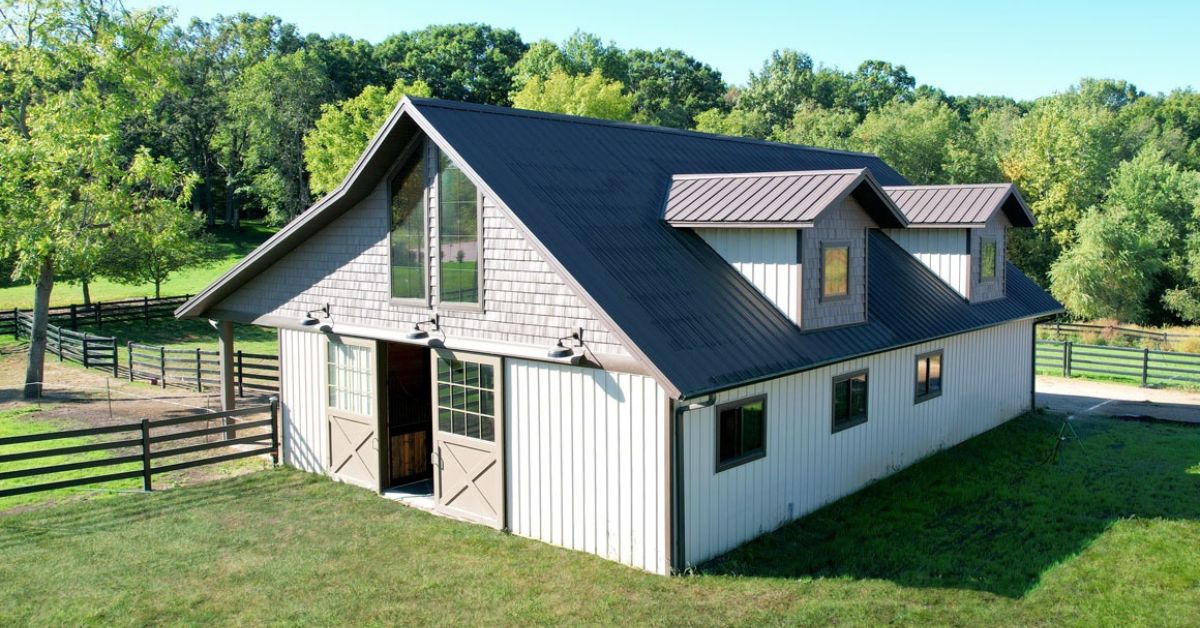
Monitor barns are a variation of the center aisle design, featuring a raised center section that the center aisle design lacks. The elevated roofline allows for additional windows or vents, improving natural light and airflow. That added ventilation is a major benefit for equine health.
The higher center section can also provide extra storage space for hay or equipment. In some designs, it creates room for a loft or second-level office space. The visual appeal of a monitor barn is another reason many property owners gravitate toward this option.
For those who want both function and architectural character, monitor-style horse pole barns can deliver a strong balance of both.
Shed Row Barns
Shed row barns feature stalls arranged in a single line, each opening directly to the outdoors. This layout is simple, cost-effective, and ideal for milder climates. Horses can move in and out easily, and daily chores are straightforward.
Shed row barns feature a single row of stalls, with each stall door opening directly to the outside. This layout allows horses easy access to fresh air and simplifies daily chores. An extended roof overhang typically provides added protection from sun and rain, helping shield stall entrances from the elements. Because of their linear design, shed row barns are also relatively easy to expand if you plan to add more stalls in the future.
Shed row barns are often used for smaller operations or as secondary barns on a property. Because of their simplicity, they are quick to build and easy to adapt over time. However, in colder or wetter regions, additional wind protection may be necessary.
Gambrel Barns
Gambrel barns are famous for their distinctive two-slope roof design. The steeper lower slope and flatter upper slope create significant overhead space. Many associate this design with classic farm aesthetics.
The extra loft space makes gambrel barns ideal for hay storage. Keeping hay above the stalls can be convenient, though careful planning is still necessary to maintain proper ventilation and fire safety standards. Modern post-frame engineering allows gambrel-style horse pole barns to combine traditional appearance with contemporary structural performance.
Property owners who value both storage capacity and a timeless look often consider this option.
Barns With Attached Arenas or Lean-Tos
As your equine needs expand, combining functions into one structure can improve efficiency. Some horse barns feature attached indoor riding arenas, equipment storage areas, or lean-to additions. This approach centralizes daily operations.
Benefits of combined-use barn designs include:
- A reduced need for multiple separate buildings
- Convenient access between stalls and arena
- Shared utilities and streamlined site layout
- Protection from harsh weather during training
These configurations are especially valuable in regions with long winters or frequent rain. Riders can move horses directly from stall to arena without exposure to the elements. Over time, this can also reduce wear on turnout areas and paddocks.
Custom Post-Frame Barn Designs
While traditional layouts remain popular, many horse owners choose to customize each aspect of their barns. Post-frame construction provides wide-open interior spans, allowing for flexible stall configurations and room placements. This flexibility is one of the major advantages of horse pole barns.
Customization options to consider include:
- Stall size and number
- Integrated tack and feed rooms
- Wash bays with proper drainage
- Ventilation systems and natural lighting features
A custom approach ensures that your barn reflects your daily workflow. For example, competitive riders may prioritize wash racks and grooming areas, while hobby owners may focus on storage and simplicity. Designing with future expansion in mind can also prevent the need for costly modifications later.
When working with an experienced building provider, customization can align the structure with your property layout, climate demands, and long-term plans.
Choosing the Right Layout for Your Operation
Every property and horse owner has different priorities. Climate, herd size, available acreage, and budget all influence which barn style makes sense. The goal is not simply to build a shelter but to create a durable, efficient space that supports horse health and daily routines.
Ventilation should always be a top consideration. Horses are sensitive to poor air quality, and proper airflow reduces moisture buildup and respiratory risks. The natural lighting that comes from building openings can also improve visibility and reduce energy costs.
It is equally important to think about traffic flow. Feed deliveries, manure removal, and equipment movement should be planned into the layout. A well-designed barn makes chores faster and safer.
Finally, consider long-term maintenance requirements. Post-frame horse pole barns provide structural durability and adaptability. When engineered correctly, they provide strength and flexibility without unnecessary interior load-bearing walls.
Planning for Future Growth
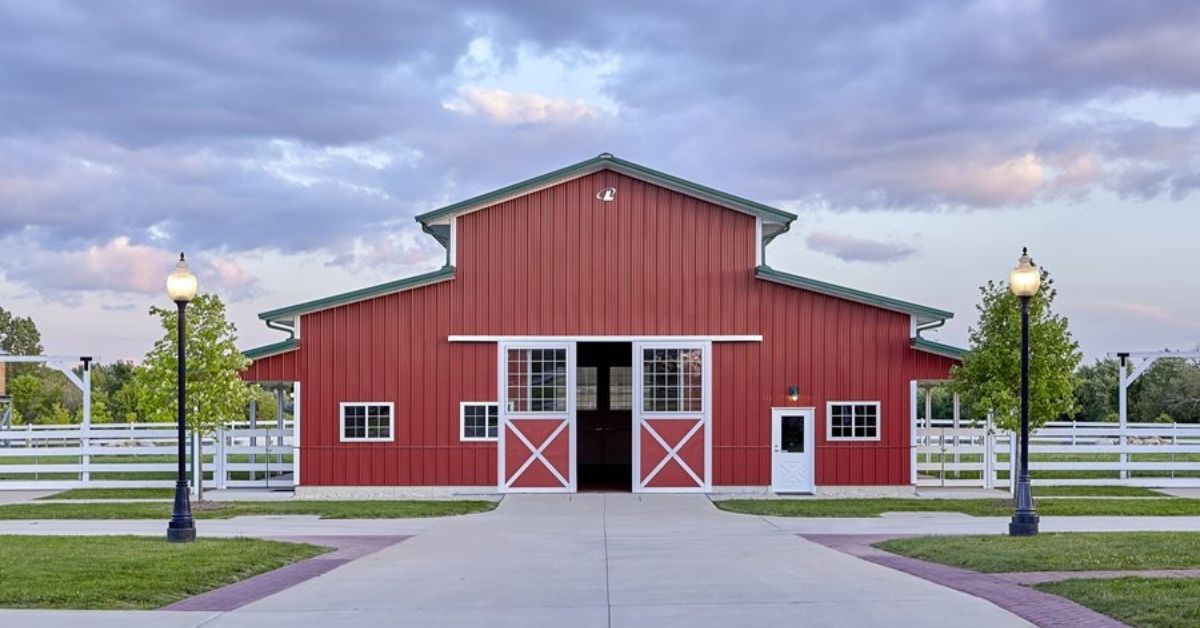
Many horse owners begin with a modest setup and expand over time. Whether you plan to add more stalls, convert space for storage, or incorporate an arena later, early planning pays off.
Positioning your barn correctly on the property can leave room for additions. Designing the structural system with expansion in mind can reduce future disruption. Working with professionals who understand equine facilities ensures that current needs and future goals are aligned.
As you evaluate the types of horse barns to consider for your property, keep your long-term vision front and center. A barn is not just a building; it is an investment in your horses and your property.
Build Your Dream Barn
The right barn balances durability, ventilation, workflow efficiency, and customization. From shed row layouts to monitor-style designs, there are many strong options available. The key is selecting a structure that supports your horses’ well-being while fitting your land and operational goals.
If you are ready to explore high-quality, custom post-frame solutions, consider working with Lester Buildings. Our team specializes in designing durable, fully customized horse pole barns tailored to your specific needs. Let us help you start planning a building that works as hard as you do.
Understanding the types of horse barns to consider for your property empowers you to make a decision that will serve you and your horses for decades to come.