
Tips for Choosing the Right Layout for Your Horse Barn
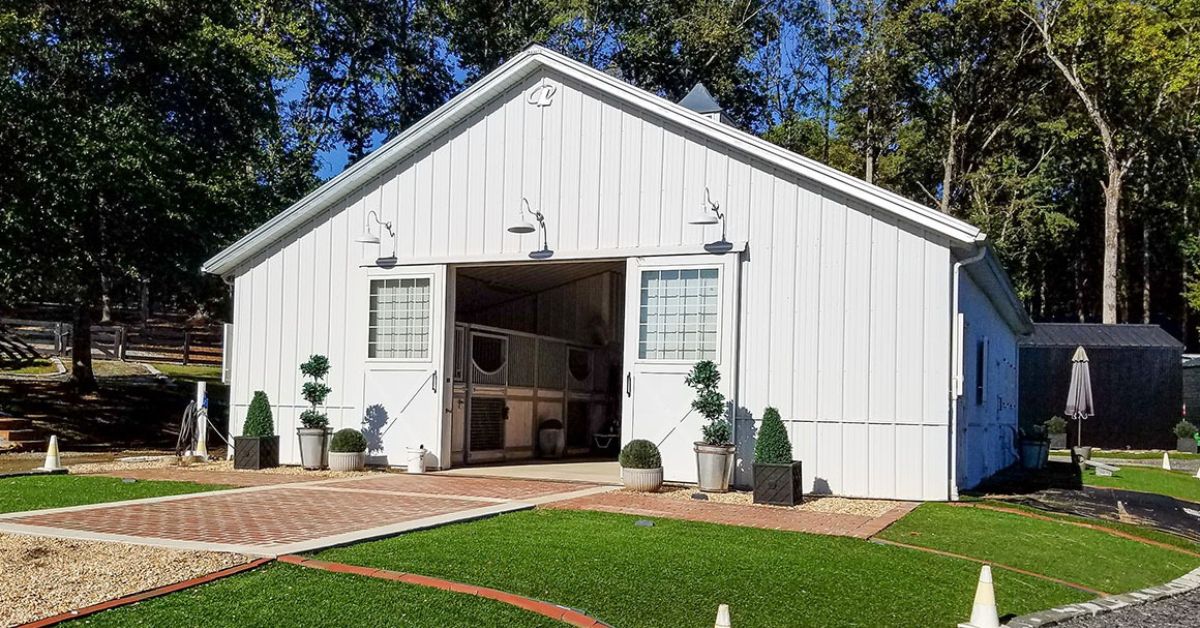.jpg "LesterBuildingSystemsLLC-411101-Your-Horse-Barn-blogbanner1-(1).jpg")
Barn layout shapes daily routines, horse safety, and long-term stable flexibility. A smart plan helps you work efficiently, protect your animals, and simplify maintenance in every season. Thoughtful choices today will continue to pay off for years to come.
That’s why it helps to map needs before drafting a plan. With the right foundation, equine pole barns can deliver durable, cost-effective performance without sacrificing aesthetics or comfort. Clear goals guide every dimension and detail as you choose the right layout for your horse barn.
Factors To Consider
Every property and herd has unique needs. Start by considering your headcount, daily workload, climate realities, and how your site handles wind and water. Workflow also matters. Think through a typical day, including feeding, mucking, grooming, and turnout. Equipment access and trailer parking will be crucial elements in your plan.
Many owners want to balance function with curb appeal. That said, safety should always be the priority. Plan to incorporate non-slip surfaces, protected edges, safe door hardware, and clear aisles that will lower risk while still looking polished.
These elements form the foundation of your plan, but let’s take a closer look at some factors that will guide your barn’s final layout.
Space Requirements
Many adult horses thrive in 12-by-12-foot stalls. Large breeds often benefit from 12-by-14-foot spaces, while ponies can manage in slightly smaller footprints. Giving each horse enough space for lying down, turning, and safe movement reduces stress and injury risk for everyone involved.
Once you know how many stalls you need and at what size, you can think about the spaces around them. Aisles need generous clearance. An aisle width of 12 feet often works well for led horses, equipment, and vet visits. However, 14 feet gives extra room for carts and deliveries. Keep in mind that clear sightlines help horses stay settled and keep handlers safe.
You’ll also need to leave room for support spaces. A wash bay around 12-by-12 feet with proper drainage keeps grooming efficient. A dedicated feed room near the center reduces steps and keeps rations secure, and tack rooms remain more comfortable with controlled humidity, sturdy racks, and durable flooring. You’ll also want to plan any hay and bedding storage with separation, fire safety, and delivery efficiency in mind.
Budget Planning
Budgets guide smart trade-offs. Start with a solid structural shell and safe, functional stall systems. Premium finishes can wait if needed. Energy choices influence long-term costs. Quality ventilation, daylighting, and insulation reduce future bills, and durable materials keep repairs further in the future.
Site work influences cost and performance. Grading, drainage, and base preparation keep water away from the barn and preserve footing. Simple footprints reduce waste, and thoughtful orientation lowers wind exposure and improves sun access without expensive upgrades.
Layout Options
The best layout will reflect your climate, herd size, and how you use the space. Each path can produce a beautiful, efficient result when aligned with your site specifications and routines.
Center Aisle Barns
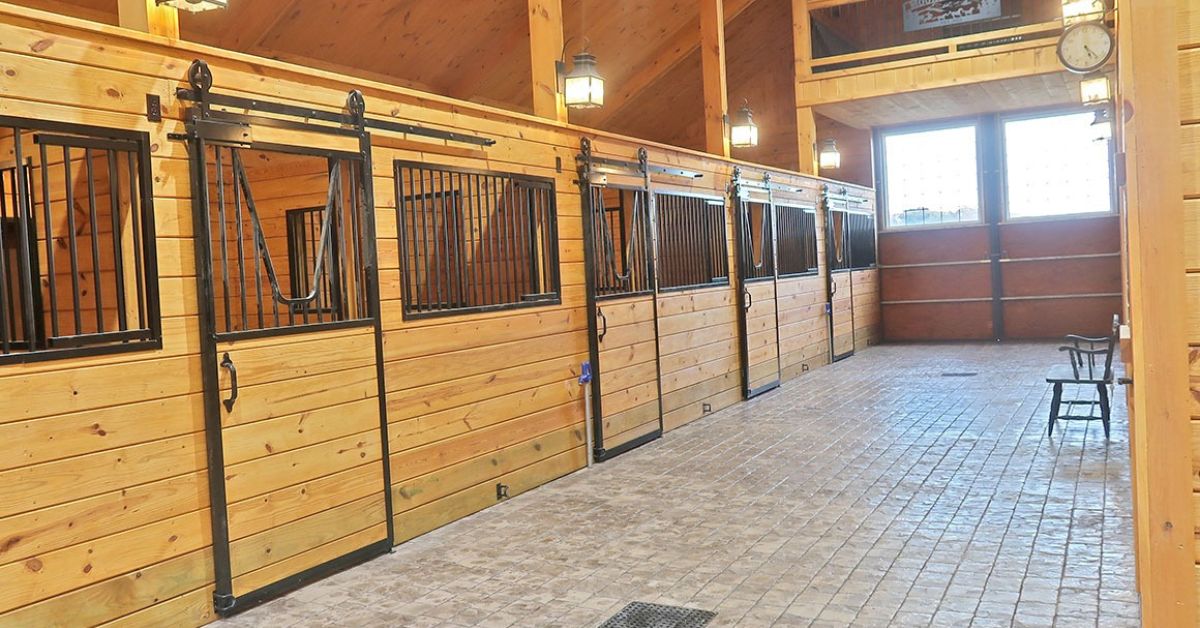
Center aisle barns concentrate stalls and work areas around a wide, central corridor. Daily chores stay sheltered, which comes in handy during rain, snow, or high winds. Horses stay calm with consistent routines, and people stay safer in controlled, well-lit spaces. Organization shines because tack, feed, and grooming can sit within a few steps of each stall.
Costs can run higher with this layout due to the need for a larger building envelope and more interior finishes. Ventilation in this layout will require planning, especially in humid climates. Well-designed ridge vents, cupolas, and eave intakes prevent stale air and excess moisture.
Shed Row Barns
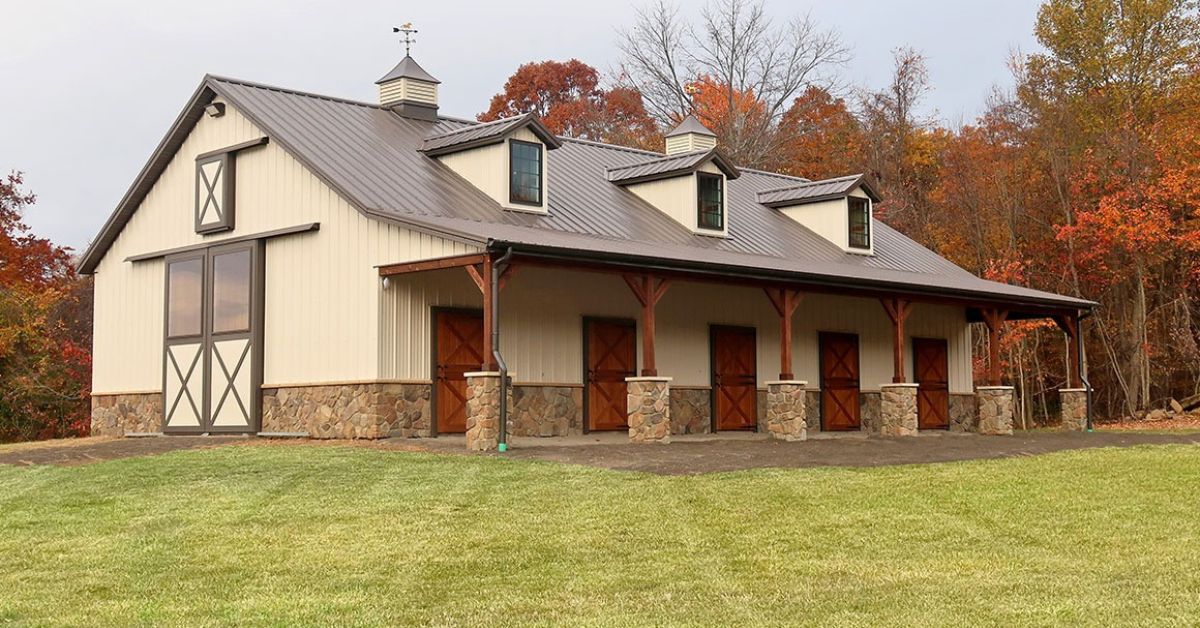
Shed row barns position stalls along an exterior aisle or porch, often with each stall opening outside. Natural ventilation excels in this format, and daylight floods every space. Horses enjoy clear views, and handlers benefit from simple, repetitive workflows along the row. Construction can be cost-effective due to a straightforward footprint and fewer interior walls.
Exposure in this layout can present a challenge in colder regions. Winter winds and drifting snow can cause discomfort, making building orientation and windbreaks more important. When it comes to security and weather protection for shed row barns, it’s important to plan for robust doors and thoughtful overhangs.
Material Selection
Materials define durability, safety, and maintenance. Horses and the demands of horse care can be hard on surfaces, so impact resistance and corrosion resistance will be crucial factors for material selection. Safe edges, chew-resistant finishes, and smooth, easy-to-clean walls make life that much easier.
Roofing
Metal roofing offers longevity, excellent weather performance, and quick installation. Standing seam systems handle snow and wind well and typically require less maintenance. Light-transmitting panels or skylights can add daylight, reducing electric use during the day.
Roofing will also affect condensation and moisture management for barn owners. Proper underlayment, venting, and insulation reduce drips and protect interior finishes. And if your region sees heavy snow, consider snow guards and structural design that handles drift loads. Whichever roof you select, keep in mind that a complete system approach performs better than piecemeal upgrades.
Siding
Steel panels stand up to impact, require minimal upkeep, and come in an array of color choices. Engineered wood and fiber cement deliver attractive profiles with stable performance when installed correctly. Adding forms of kick protection inside stalls, such as lined plywood or composite panels, prevents denting and keeps horses safe with either siding option.
Interior surfaces should be smooth, sealed, and easy to sanitize. Moisture resistance reduces odors and protects structural members.
Ventilation and Lighting
Healthy barns manage air and light thoughtfully. Horses are sensitive to dust, ammonia, and humidity. Constant, gentle air exchange lowers respiratory risks and keeps bedding drier. Meanwhile, good lighting supports safety, grooming accuracy, and consistent routines. Natural light also cuts energy use while improving barn ambience.
Natural Lighting
If you want to take advantage of natural light, you’ll need to think about the orientation of your barn layout. Aim to include windows that capture morning light without overheating stalls in the afternoon. You can use clerestory windows or translucent panels distribute daylight deeper into the barn.
Ventilation Systems
Ridge vents paired with soffit intakes create a reliable, passive airflow path. Cupolas with louvers increase draw and add a classic look. Mechanical fans assist on still days, especially in enclosed center aisle barns. Air should move gently without creating drafts at horse level.
Making the Right Choice
Support from experienced professionals can help you achieve the perfect layout for your herd. Specialists who design equine pole barns daily understand stall placement, ventilation math, and the durability details that elevate safety. Partners who listen, sketch options, and calibrate budgets can help you achieve a balanced plan without costly detours. A collaborative approach saves time and delivers a better barn for your animals.
Lester Buildings designs and engineers equine pole barns with safety, comfort, and long-term value in mind. Custom options, safety-tested stall systems, and knowledgeable local dealers streamline the process. MyLester Design tools make it easier to visualize choices and refine the plan before construction begins.
Your Next Step
Clear goals, a fit-for-climate layout, durable materials, and reliable ventilation form a winning combination. With careful planning, you can confidently choose the right layout for your horse barn and enjoy a facility that supports every ride, chore, and season. Ready to design a barn that works as hard as you do? Reach out to Lester Buildings for tailored solutions, local expertise, and a design process that brings your vision to life.