
What To Know About Ventilating Your Livestock Buildings
.jpg?lang=en-US "LesterBuildingSystemsLLC-411097-Your-Livestock-Buildings-blogbanner1-(2).jpg")
Air contributes to animal health, livestock comfort, and profitability in ways few building features can match. Early planning for effective ventilation is crucial; well-placed inlets, properly sized fans, and smart building design all work together to protect your product. No matter which livestock you plan to house, ventilating your livestock buildings should be a key part of your design process.
Why Proper Ventilation Is Essential
Cleaner air can do a number of things for your animals and your overall operation. To start, it reduces the concentration of ammonia, hydrogen sulfide, and dust. Lower contaminant levels ease respiratory stress, which supports immune function and reduces disease pressure. Easier breathing translates into calmer animals, quicker recoveries, and fewer setbacks.
Comfort also drives productivity. Cattle, hogs, and dairy herds all perform best within a defined thermal comfort range. Balanced airflow helps maintain that zone, encouraging steady feed intake and better daily gains. Dairy cows respond with more consistent milk yields, while beef cattle can more easily gain when you have heat stress under control.
Humidity is another factor that makes dependable ventilation so necessary. Humidity control prevents condensation, which can drip onto bedding, feed, and animals. Dry surfaces keep pathogen growth in check and protect building materials, meaning fewer safety issues and repair costs. Steady moisture management also preserves insulation performance, which supports stable temperatures across seasons.
Common Ventilation Challenges
Insufficient airflow lets ammonia and moisture linger. Animals breathe harder, bedding stays damp, and disease risk climbs.
That said, stagnation isn’t the end-all, be-all of the airflow conversation. Overventilating wastes energy and can create chilling drafts that present hazards for young animals. It also leads heating systems to work harder in winter, with fan motors logging extra hours without meaningful results. Smart controls and staged ventilation keep air movement aligned with actual needs.
Inconsistent ventilation is another challenge, as it produces hot spots and cold corners. Temperature swings within a single barn bring uneven feed intake, restless behavior, and avoidable stress. Balanced distribution of air—across pens, alleys, and resting areas—keeps animals calmer and operations more predictable.
Types of Ventilation Systems
Natural ventilation harnesses wind and thermal buoyancy. When designed well, this approach reduces energy use and encourages gentle, consistent airflow. Many beef and dairy facilities thrive with a natural system, especially when it’s possible to match building orientation and opening sizes to local wind patterns.
Mechanical ventilation uses fans and controls to move air predictably. Tunnel or cross-ventilation pulls air along a defined path, providing consistent exchange rates regardless of outdoor conditions. Sensors tied to temperature, humidity, and ammonia levels help fans ramp up or down as needed, which keeps conditions stable through seasonal swings.
Hybrid systems combine the two. Natural airflow does the baseline work, while strategically placed fans kick in during heat events or still days. This approach offers energy savings with the safety net of mechanical support, which suits regions with varied weather and multi-species operations.
.jpg "LesterBuildingSystemsLLC-411097-Your-Livestock-Buildings-imageA1-(1).jpg")
Designing Effective Ventilation
Airflow requirements depend on species, animal size, stocking density, and season. Calves, finishers, and lactating cows all produce different heat and moisture loads, so ventilation targets should match the expected livestock and their life stages. Clear performance goals help define required air changes per hour and set expectations for winter minimums and summer maximums.
Inlets and outlets control how air enters and exits. Adjustable openings manage air speed and mixing, reducing drafts at animal level while improving distribution overhead. Even, gentle air entry prevents cold spots by the walls and warm pockets near the ceiling.
Fan placement matters as much as fan count. Fans should encourage a smooth, continuous path, not force air from inlet to outlet. Long, unobstructed lanes promote uniform conditions across pens. Regular maintenance protects performance, since dust and wear can erode airflow and upset pressure balance.
Controls make the system responsive. Variable-speed fans, staged operation, and sensor-driven adjustments reduce waste and protect comfort. Alarms and remote monitoring add insurance, helping you correct issues before they contribute to animal health problems.
The Role of Building Design
Several elements of building design can affect the ventilation options available and the overall efficiency of the building’s airflow. These elements include orientation, roof design, insulation, interior layout, and material choice.
Orientation
Orientation sets the stage for natural ventilation. Aligning sidewalls and openings with prevailing winds helps air flow across animal spaces, not just along roof lines. A thoughtful site plan also keeps surrounding structures, trees, and topography from blocking wind or creating turbulence.
Roof Design
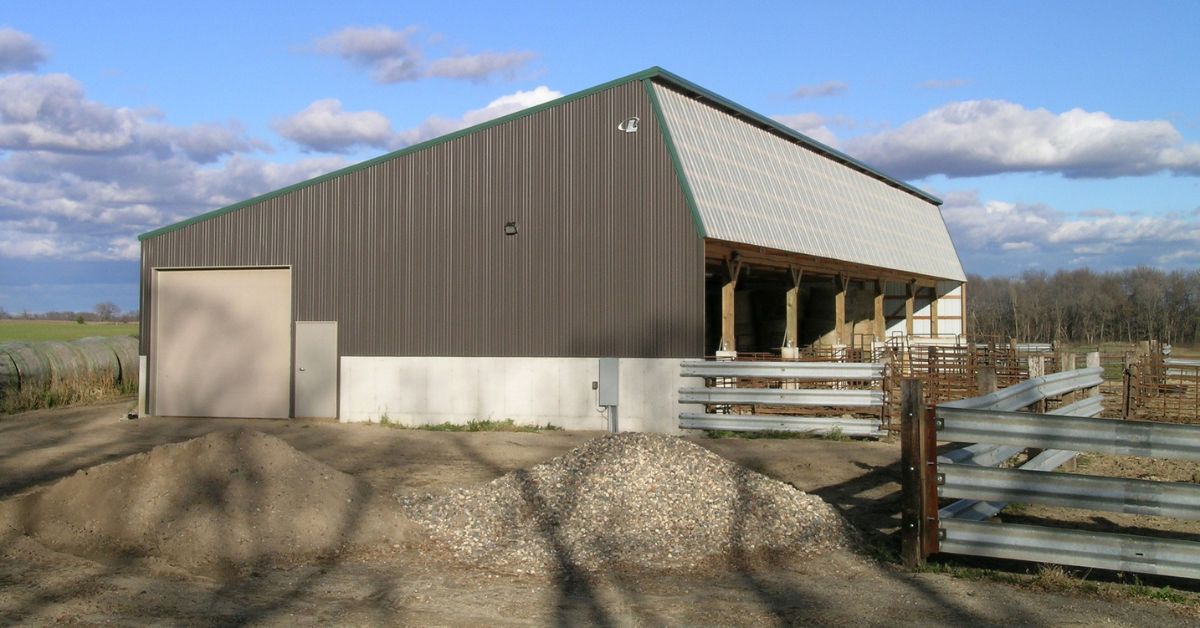
Roof design shapes airflow patterns. Monoslope beef barns, as an example, leverage a higher open side to enhance buoyancy-driven exhaust. Adequate ridge venting, combined with proper overhangs and eave height, keeps fresh air moving while shedding rain and snow away from openings.
Insulation
Insulation supports ventilation by keeping internal surfaces above dew point. Warm surfaces resist condensation, which safeguards bedding and reduces bacterial growth. A well-insulated and air-sealed roof assembly also slows heat gain in summer and heat loss in winter, enabling ventilation to work efficiently rather than fight against large thermal swings.
Interior Layout
Interior layout influences air movement. Pens, alleys, curtains, and solid partitions can either guide airflow or block it. Strategic openings, thoughtful pen orientation, and consistent ceiling heights help air reach every corner. Work with your builder to model how air will travel from inlet to outlet, then adjust barriers and openings to prevent stagnation.
Material Choices
Durable materials keep the system reliable. Corrosion-resistant fans, easy-to-wash inlets, and accessible controls reduce downtime and keep performance consistent. Planned service points make routine cleaning and maintenance simpler, which preserves airflow targets and extends equipment life.
.jpg "LesterBuildingSystemsLLC-411097-Your-Livestock-Buildings-imageB1-(1).jpg")
Bringing It All Together With a Trusted Partner
Every operation is unique, yet the fundamentals remain consistent. Air must enter predictably, mix evenly, and exit efficiently. Building design, system choice, and controls all need to support the animals you house now and the expansions you plan next. Lester Buildings has delivered thousands of livestock buildings across climates, and that experience shows in our work today.
Our team can help you plan a structure with ventilation in mind from the beginning, avoiding costly compromises and inefficiencies that limit your operation. We understand that each livestock facility comes with its own specific requirements, and our integrated approach can protect your investment while supporting better performance.
Health, From the Air Up
Ventilation shapes animal health, comfort, and productivity more than almost any other building decision. The right mix of natural, mechanical, or hybrid airflow keeps humidity in check, reduces disease risk, and delivers steadier gains. Strong results depend on thoughtful design, responsive controls, and a building that supports the path air needs to travel.
Producers who plan early see fewer tradeoffs and better long-term returns. If you want confidence that your next barn handles wind, weather, and growth plans, partner with a team that treats airflow as part of the structure, not an afterthought. Lester Buildings can help you evaluate your options, design a system that fits your animals and climate, and engineer a structure that works in every season.
Your animals, your team, and your numbers benefit when air does its job. Start the conversation with a Lester Buildings dealer, or use MyLester Design to begin shaping ideas into a workable plan. Schedule a consultation and make ventilating your livestock buildings a proven strength in your operation.